Backend Engineering
Laravel Development & Architecture
Production-grade Laravel for the apps you actually want to scale: SaaS platforms, internal tools, multi-tenant systems, marketplaces, and APIs. Architecture, code, performance, and the long-term maintainability your team will thank you for.
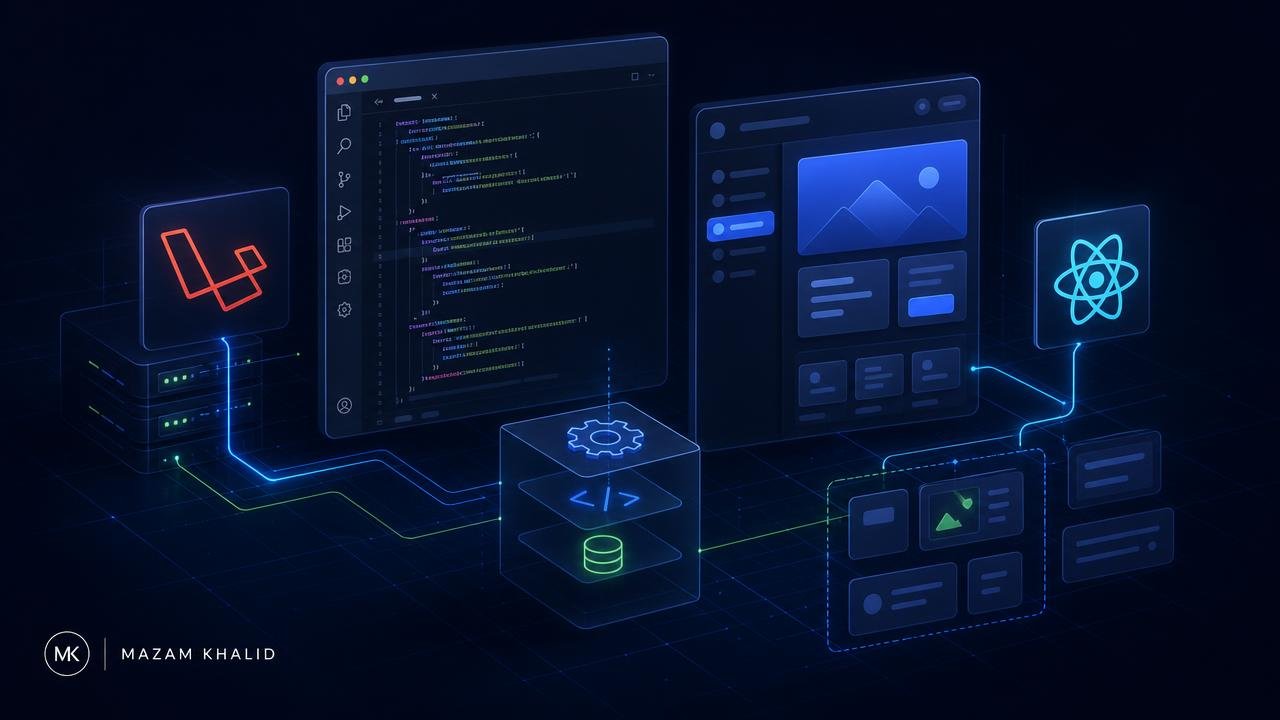
What's Included
Comprehensive solutions tailored to your specific needs
SaaS & multi-tenancy
Single-database row-based tenancy or database-per-tenant via Tenancy for Laravel, billing via Cashier (Stripe/Paddle), and proper tenant isolation.
Filament admin panels
Resource-driven admin UI with RBAC, custom widgets, bulk operations, exports, and audit logging.
API design
RESTful or GraphQL APIs with OpenAPI documentation, versioning, Sanctum/Passport auth, and rate limiting.
Queues & background jobs
Horizon, Redis-backed queues, retry strategy, and observability for the jobs that actually carry your workload.
Octane performance
Swoole or RoadRunner deployment for the apps where the throughput gain justifies the discipline.
Testing & CI
PHPUnit or Pest test suites, factory-driven fixtures, GitHub Actions CI, and deploy gates against test pass rate.
Problems I Solve
Symptoms this engagement is built to fix
A Laravel application that started cleanly and is now a 200-controller monolith nobody wants to touch.
A SaaS that runs fine for one tenant and falls over the moment the second one signs up.
Background jobs that silently fail because Horizon was never properly configured.
An admin panel built three times in three different ways — none of them maintainable.
API endpoints with no contracts, no versioning, and no documentation, breaking the mobile app weekly.
Slow queries, missing indexes, and N+1s that have been ignored for so long they feel normal.
Why Laravel is the right call for most non-trivial web apps
Laravel hits a sweet spot that few frameworks reach: a productive developer experience, a mature ecosystem (Filament, Nova, Horizon, Octane, Pulse, Sanctum, Cashier, Forge, Vapor), and a clear path from prototype to production scale. For most SaaS platforms, internal tools, and bespoke web applications, it is faster to ship in than Node, more maintainable than Django for teams that prefer PHP, and dramatically cheaper to operate than the equivalent Java stack. The risk is that the same productivity that lets you ship quickly also lets you accumulate architectural debt quickly. My engagements focus on writing Laravel that will still be a pleasure to work with after three years of feature growth — not just code that passes the next sprint review.
Architecture decisions that compound over time
Most Laravel codebases that become unmaintainable made the same handful of decisions early. Fat controllers instead of service or action classes. Eloquent models with 800 lines of domain logic. No domain boundaries, so every change touches twelve files across four contexts. No background job discipline, so synchronous code that should be queued blocks user requests. No event sourcing or audit trail, so debugging a customer issue means reading raw database state. My engagements ship Laravel that uses single-purpose action classes, thin controllers, domain-scoped service objects, queued jobs for everything that is not a pure read, broadcast events for cross-context communication, and either Spatie's event sourcing package or simple audit logs depending on stakes. None of this is exotic — it is just discipline that the framework's productivity makes easy to skip.
Filament, Livewire, and the admin panel question
Filament has become the default admin panel for Laravel in 2025 and for good reason: built on Livewire, rich form and table builders, real RBAC, custom pages, dashboards, multi-tenancy support, and a UX that internal teams genuinely like using. Most clients save tens of thousands compared to a custom React admin, and the resulting admin is more maintainable. I build Filament-based admin panels with proper resource scoping, custom widgets where dashboards justify them, exports and bulk actions, queueable bulk operations, and full audit logging. For SaaS platforms with non-admin tenant-facing UIs, Livewire + Alpine is increasingly the right call as well — it delivers a SPA-like experience without the operational cost of a separate React frontend.
Performance: Octane, queues, and the queries that quietly destroy you
Most Laravel performance problems are database problems. N+1 queries through Eloquent relationships, missing composite indexes on the queries that drive listing pages, query bloat from `select *` everywhere, and an absence of any query observability so the team has no idea which queries are slow until customers complain. Tooling like Telescope (dev), Pulse (production), and Clockhouse make this visible; the engineering fix is eager loading, query refactoring, and proper indexing — typically a one-week intervention that triples application throughput. Beyond that, Laravel Octane (Swoole or RoadRunner) keeps the framework in memory between requests and removes the boot cost from every page load. For high-traffic apps it is the single largest performance unlock available, but it does require disciplined code (no stateful service container leaks, careful use of singletons, container reset on signal). I run Octane in production where the cost of the engineering discipline is justified by the performance gain.
API design, versioning, and the contract with your front-end
API endpoints that have no formal contract are technical debt waiting to break the mobile app or the React SPA. My standard Laravel API engagements use Laravel API Resources for response shaping, FormRequest for validation contracts, explicit versioning (URI-based for public APIs, header-based for internal ones), OpenAPI generation via Scribe or L5-Swagger, Sanctum or Passport for authentication depending on scope, and Telescope or custom logging for request observability. For higher-scale APIs, I build with Spatie's Query Builder for filtering, sorting, and including relations safely; for GraphQL, Lighthouse remains the strongest option in the Laravel ecosystem. Documentation is generated from code, not maintained as a separate artefact that drifts out of sync.
What You Receive
Deliverables & expected outcomes
- Production-ready Laravel codebase with documented architecture
- Filament admin panel where applicable
- OpenAPI-documented API with versioning strategy
- Queue, cache, and database layer engineered for your real load
- Test suite and CI pipeline
- Deployment pipeline via Forge, Vapor, Envoyer, or your existing platform
Illustrative Engagement
A representative scenario
The problem
A B2B SaaS built in Laravel 8 had grown into a 300-controller monolith. New features took weeks, the admin panel was a custom React app no one wanted to maintain, and the API was breaking the mobile client every release.
The approach
We upgraded to Laravel 11, refactored the controller layer into action classes with proper service boundaries, rebuilt the admin in Filament in three weeks, introduced API versioning with Scribe-generated OpenAPI docs, and added Horizon for the background work that had been running synchronously.
The outcome
Average feature lead time dropped from 14 days to 4. The admin panel reduced active maintenance to near zero. The mobile API stopped breaking between releases entirely.
Composite scenario based on typical engagements. Replace with a real, attributed case study once published.
My Process
A proven methodology for delivering exceptional results
Discovery & architecture
Stakeholder interviews, domain modelling, technical risk assessment, and a written architecture decision record.
Foundation
Project skeleton, CI/CD, environments, auth, RBAC, admin shell, and the cross-cutting concerns that everything else depends on.
Iterative delivery
Two-week sprints with shippable increments, demo at end of every sprint, and a working application from sprint one.
Hardening & handover
Load testing, security review, documentation, onboarding for your team, and an optional retainer for ongoing engineering.
Why Choose Me?
With 7+ years of experience and a track record of delivering results, I bring expertise, reliability, and a results-driven approach to every project.
- Architecture decisions that age well, not Stack Overflow expediency
- Filament admin panels that internal teams actually enjoy using
- API contracts your front-end and mobile clients can trust
- Database and queue work that triples throughput on existing infrastructure
- Senior engineer delivering directly, no junior hand-off
- Optional ongoing retainer for steady iteration after launch
Starting at
€1,997
Production Laravel engineering: architecture, SaaS, APIs, Filament, Octane, queues, testing, and deployment. Ongoing retainers available.
Frequently Asked Questions
Related Services
Further Reading
Related articles from the blog
Ready to Get Started?
Let's discuss your project and create a custom strategy for success.